Big Sur Marathon
A hundred meters from the finish of the Big Sur Marathon, another runner surged past me and I let them go. I found out later who it was.
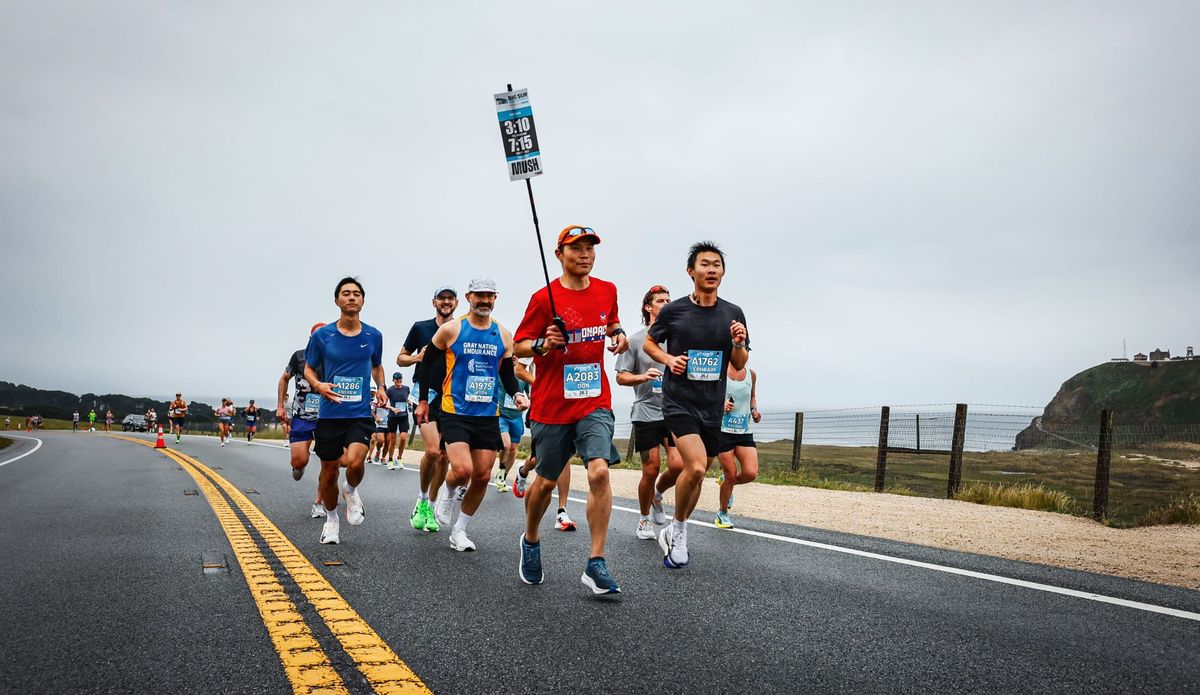
A hundred meters from the finish in Carmel, another runner surged past me.
The last four miles had been a slog. I let them go.
I didn’t know who it was. I found out later, and by then it was only the second most important thing that happened in those last hundred meters.
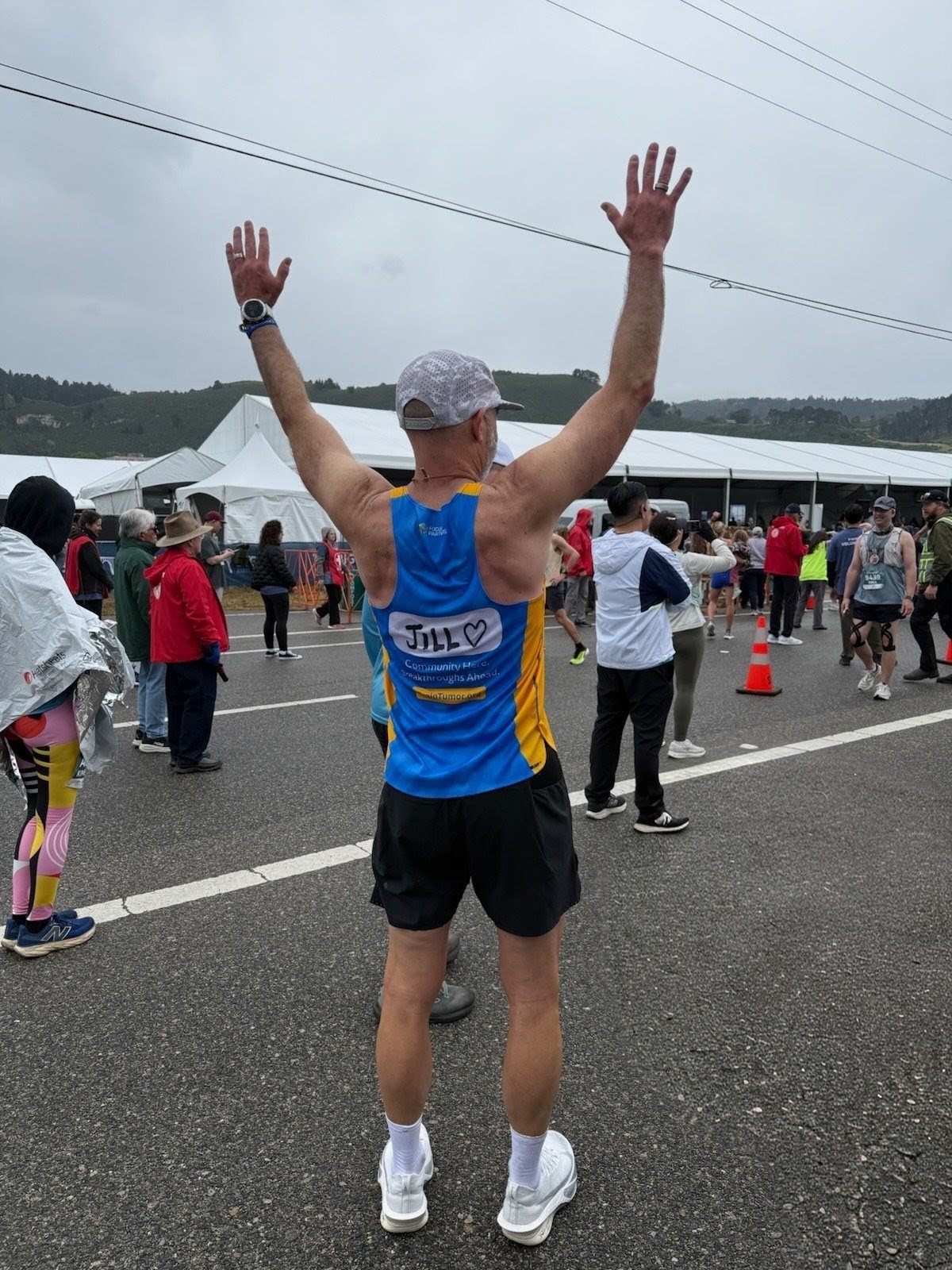
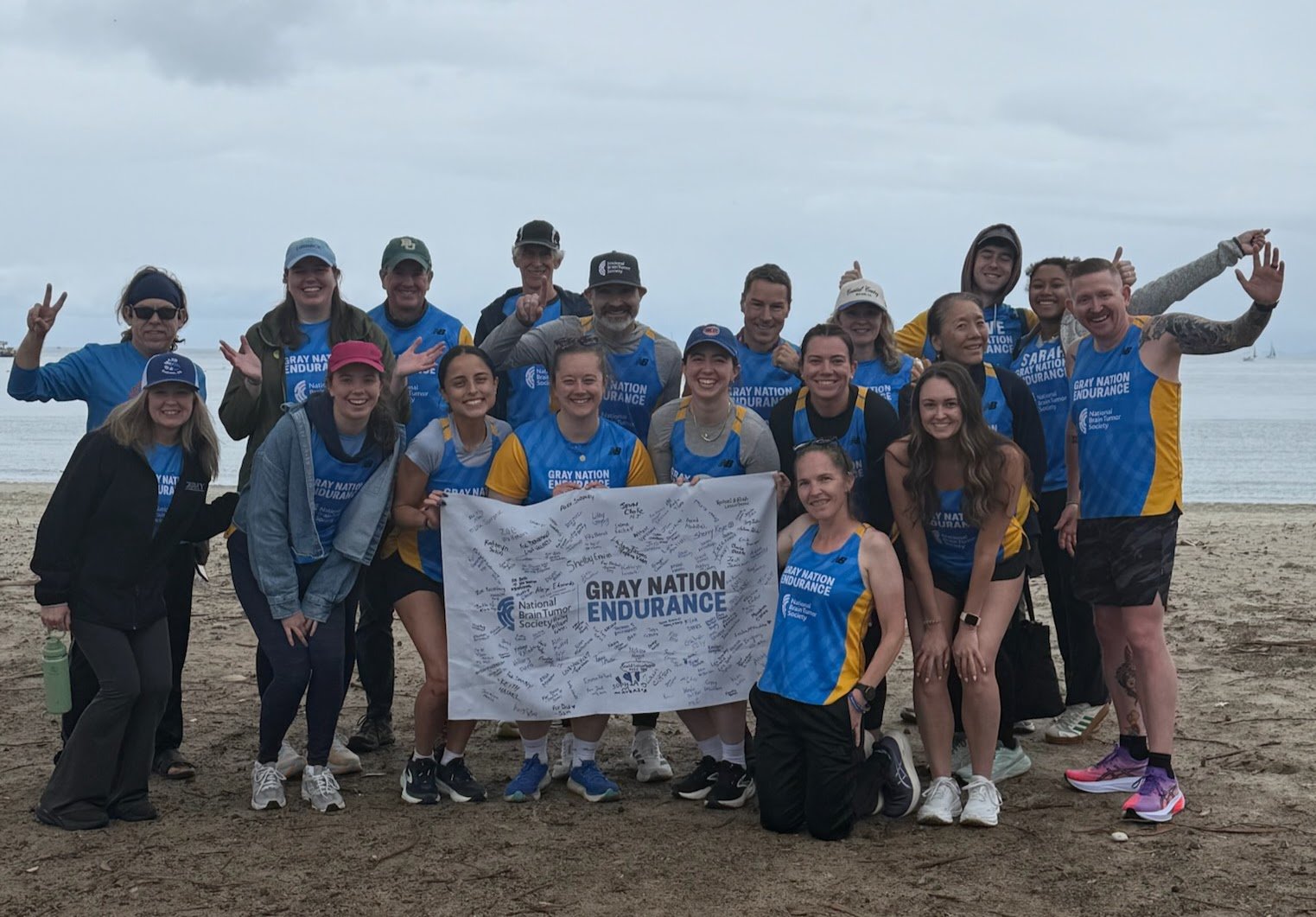
This was my 12th marathon, twenty years after my first, in 2006. Jill and I had been raising money for the National Brain Tumor Society with the Gray Nation Endurance team, so the clock wasn’t the only reason I was out there.
3:15 a.m.
The alarm went off at 3:15. By 4:00 I was on a bus heading down the coast in the dark, on the same winding road I’d soon be running back up.
The race calls itself “Running on the Ragged Edge of the Western World.” It isn’t a course for a PR. Between the rolling hills and the two-mile climb to Hurricane Point, the elevation profile looks like a saw blade. My training had gone to plan, and I had my sights on 3:10.
Hurricane Point
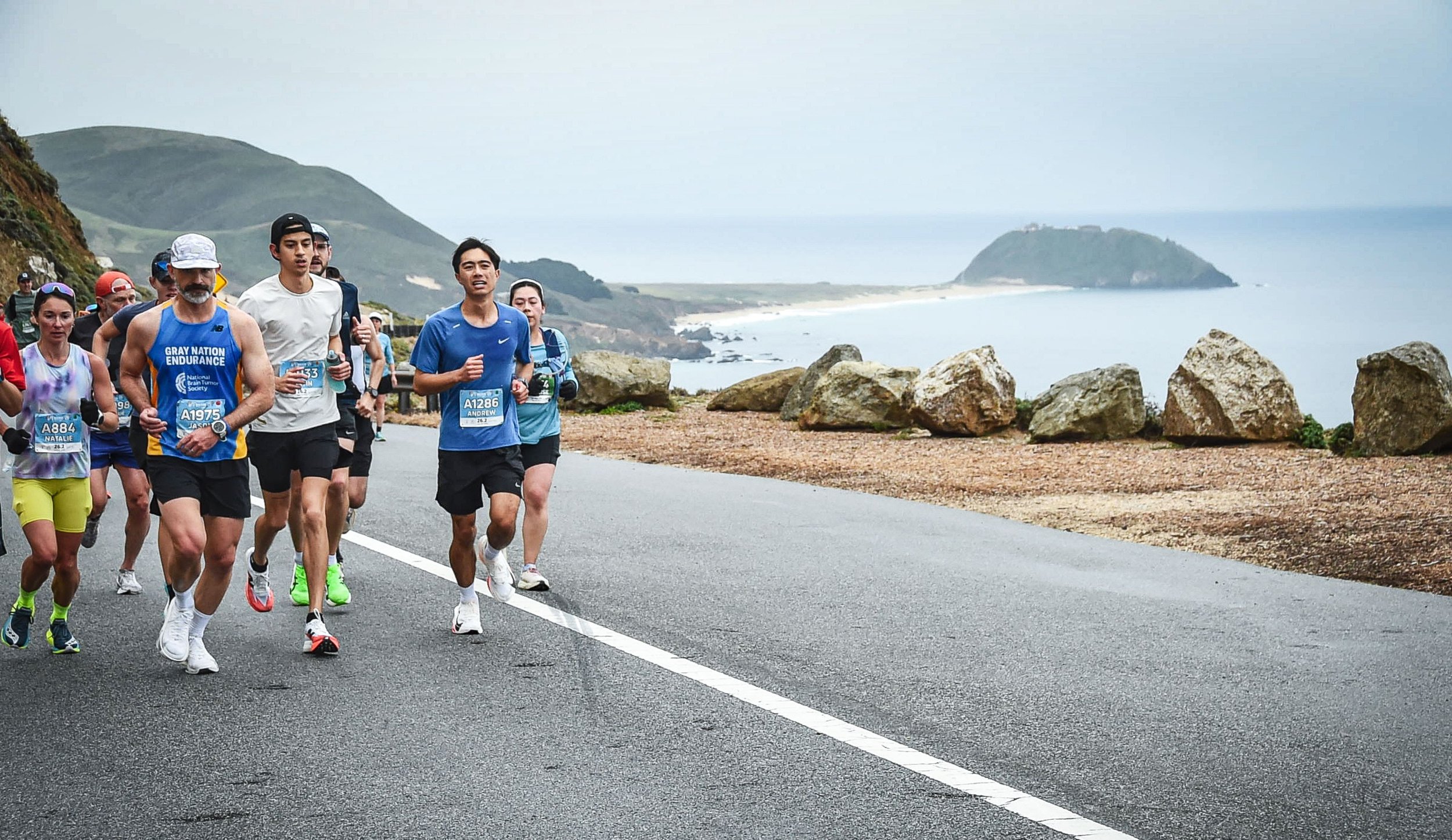
Our pace group started large. The hills thinned it. At the base of Hurricane Point there were ten of us. At the summit, about six.
On the climb I counted my breathing from one to ten: in on one, out on two, on up to ten, then back to one. In a hard race it’s easy to hold your breath without noticing, and I wanted my legs getting every bit of oxygen they could. The counting kept me grounded. Every breath counted, so I counted every breath.
Bixby Bridge
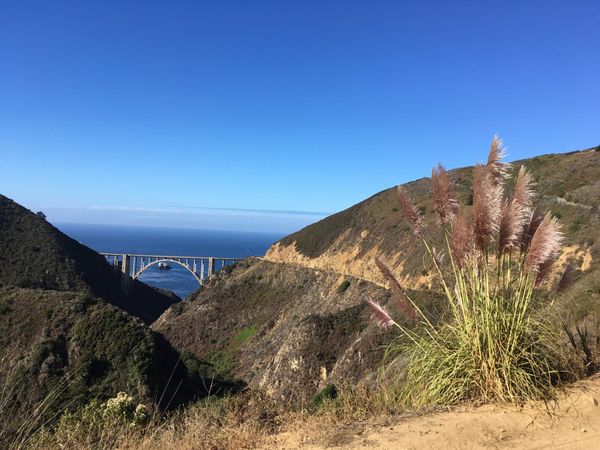
Then down to Bixby Bridge at halfway, mist on the spans and grand piano music carrying across the canyon. It was the most peaceful minute of the race, and the last one for a while.
Mile 22
I used caffeinated gels to keep my mind out of unproductive places, and for most of the race I felt strong. By mile 22 the pounding downhills and the off-camber road had started to take their toll. The 7:15 pace began to feel like one I couldn’t hold. I made a gut call, backed off a few clicks, and let the pace group pull ahead.
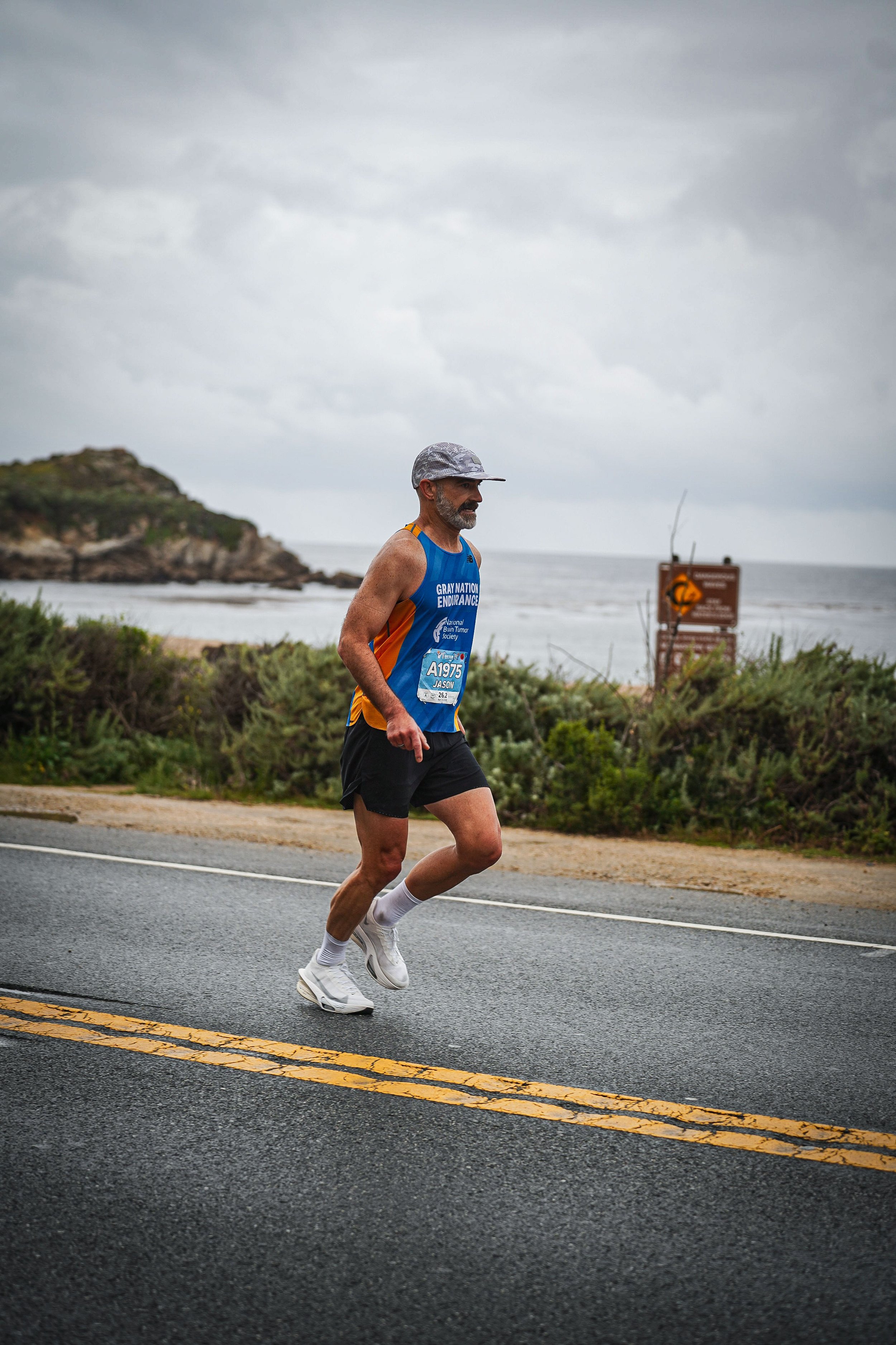
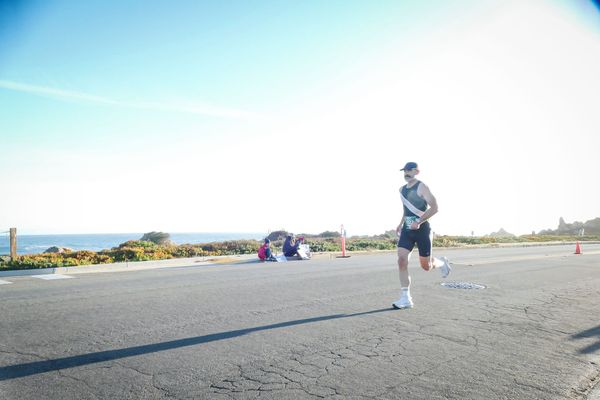
The last four miles were a slog. Coming into Carmel, the crowd gave me a final lift. Then came the last hundred meters, and the runner I let go.
3:12:55
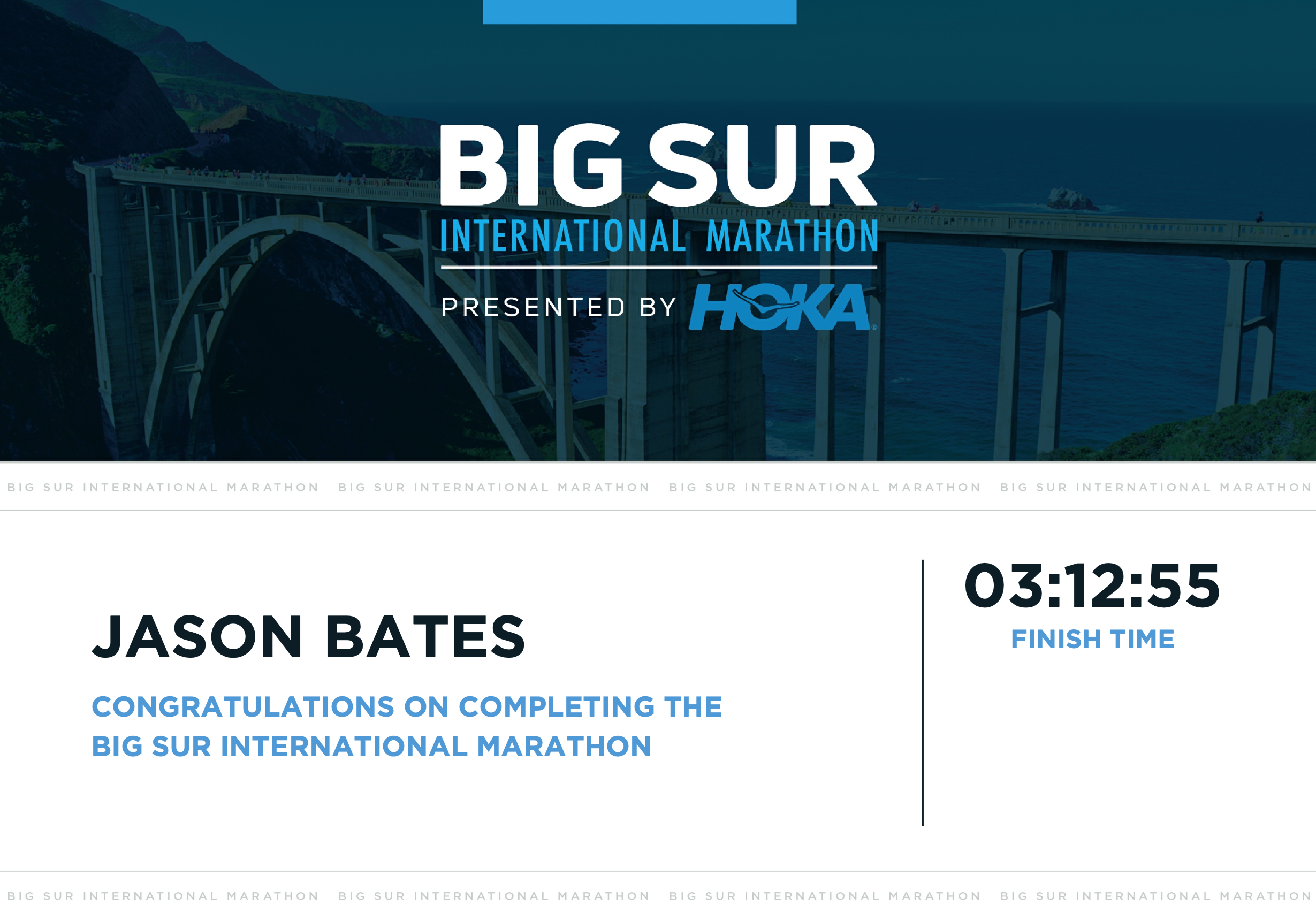
I finished in 3:12:55. It wasn’t until later that I found out who had passed me: the third-place runner in my age group, 45–49. I was fourth, one spot off the podium.
That’s a plain reminder that a race isn’t over until it’s over. It’s also fourth in my age group, at 49, in a marathon this size. Focus and discipline got me there.
Looking at my splits and how I felt on those hills, I’ve started to wonder: if I can run 3:12 on the Ragged Edge, could I go under 3:00 on a flat course?
That’s for another day. Jill and I set out to raise $5,000 and, thanks to a generous community, reached $5,600. The whole Gray Nation Endurance team raised $105,000 for the National Brain Tumor Society to help end brain tumors. Thank you to everyone who supported us. We’ll see you on the next starting line.
The other side of the barrier
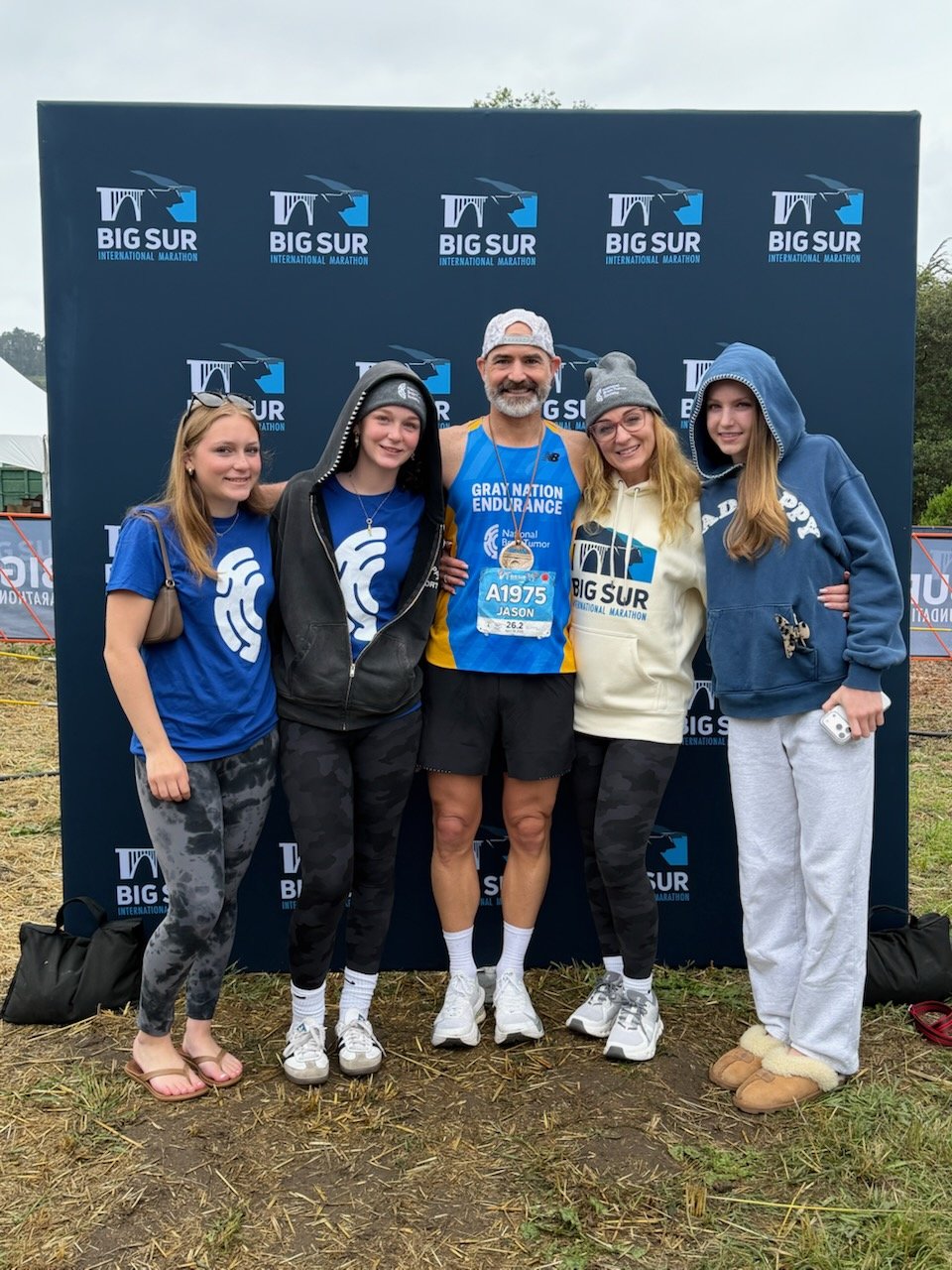
At the line I didn’t know any of that yet. The second I crossed, the race brain was gone. I heard Jill and the girls shouting my name, and that was the best trophy I could have asked for.
For four miles I’d watched people pull away from me: the pace group, then one more runner a hundred meters from the end. Now Jill and the girls were running toward me on the other side of the barrier.