Pacing Quicksilver 100K
For twenty-one miles at the Quicksilver 100K, my attention belonged to someone else. The last thing I did was step off the trail.
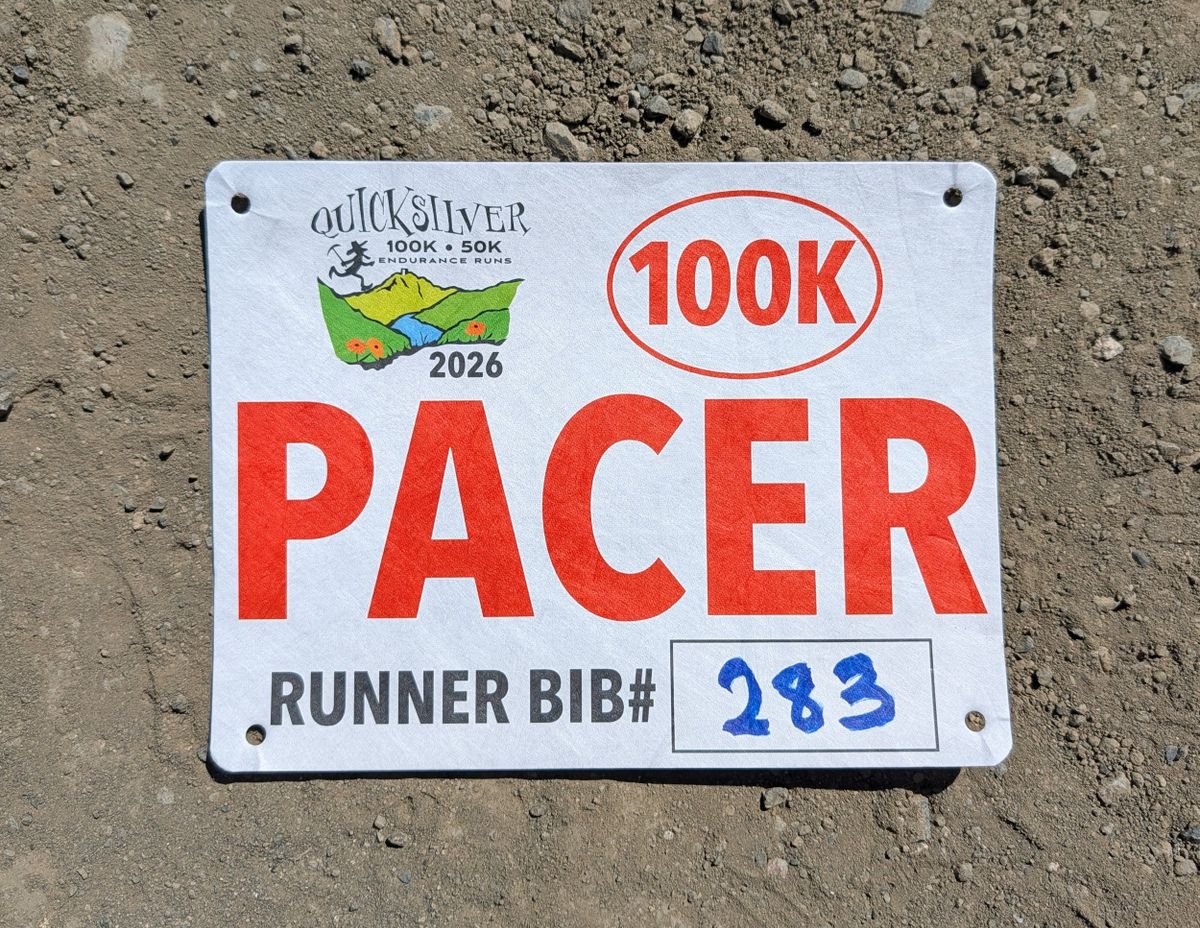
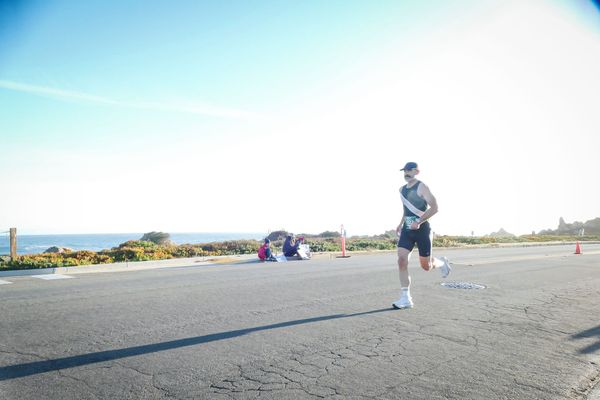
Five hundred meters from the finish, I stepped off the trail and into the shade. Bryan didn't notice. He had nearly sixty-two miles in his legs and a finish line in front of him, and for the first time all afternoon he didn't need me.
The handoff
I've raced plenty of ultras. Until this one, I'd never been inside someone else's. Back in 2017 Bryan paced me through a 50-miler in Park City, Utah. This spring he asked me to return the favor: the last 21 miles of his first 100K, at Quicksilver. Bryan is a swimming world record holder and co-hosts the Social Kick podcast. Sixty-two miles of hills was new territory.
Almaden Quicksilver County Park sits at the south end of Almaden in the South Bay, a web of trails that roll hard up and down the western ridge of Silicon Valley. For all my years around the Bay Area, I'd never set foot in it. I got there early, ran a few quiet miles through the neighborhood to settle my head, and waited at the car with Lauren, Bryan's girlfriend.
Lauren had been out since 3:30 that morning, getting him to the start and meeting him at the early aid stations. Crew don't get finisher's medals. They should. They are the infrastructure nobody sees.
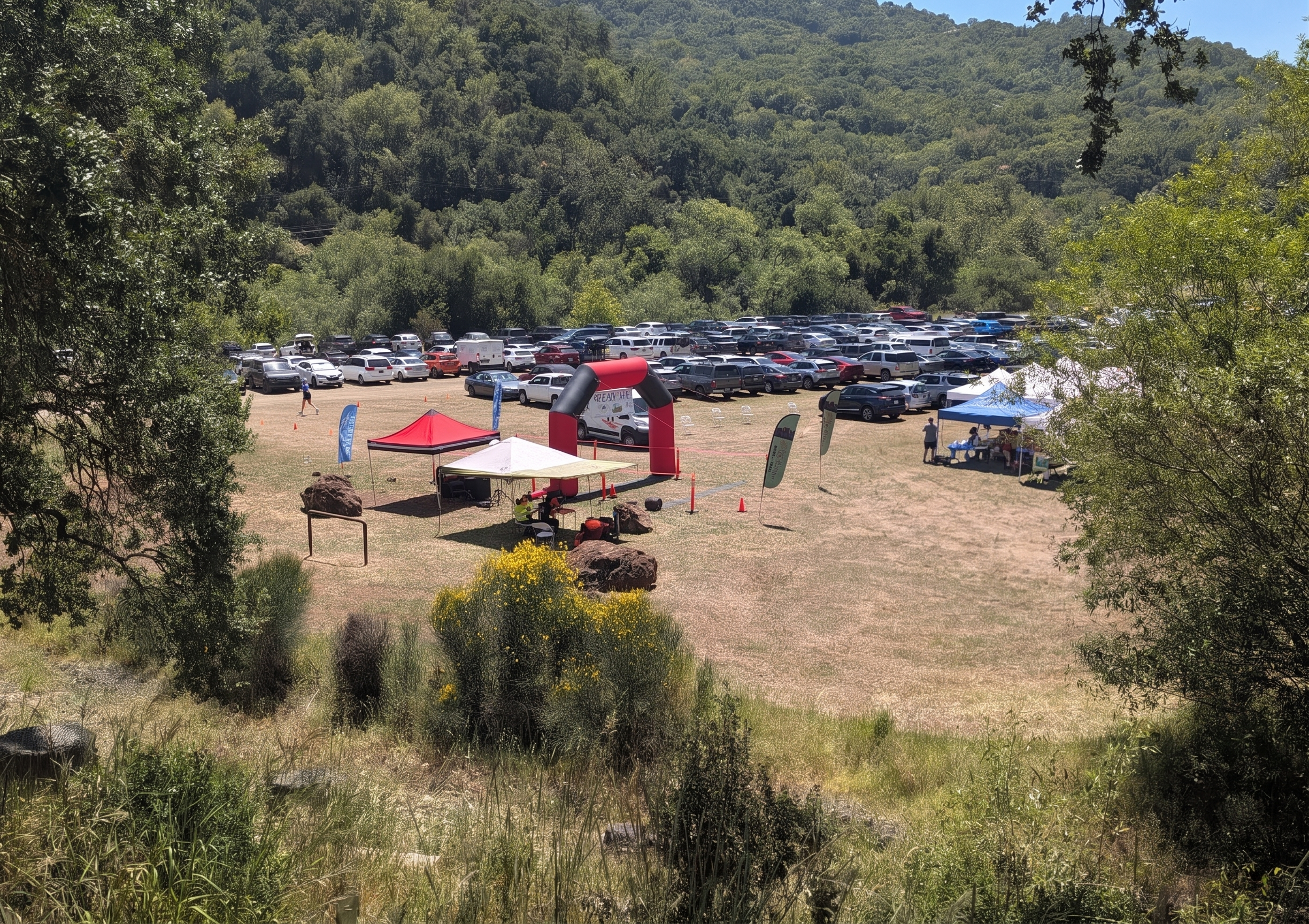
He was due at 2:00. Lauren spotted him at an aid station three miles out and sent word. At 1:45 he rolled into mile 41, early, and looking better than anyone has a right to at mile 41.
I knew what it had probably cost him to look that good. Around mile 30 of a 100K there's a dark patch: the moment your brain adds up everything you've done and then reminds you you're only halfway. I've run two of these. He'd come out the other side.
Lauren made sure he had what he needed, and we left.
The metronome
I'd come ready to hike. Bryan had other plans. We ran the flats, attacked the downhills, hiked the climbs, and I'm fairly sure we jogged a few of those too.
Within five miles it was obvious he'd run the first forty with discipline: even pacing, food and water on schedule. So my job wasn't motivation. It was rhythm. Keep the pace steady. Ask when he last ate. Ask again between aid stations. The afternoon climbed into the 80s, never unbearable, and the ice at each aid station felt like pure luxury.
In my own races, attention turns inward and stays there. Here almost all of mine was on him: his stride on a descent, how long since his last fuel, whether a grimace meant a cramp or just the hill.
Mile 50
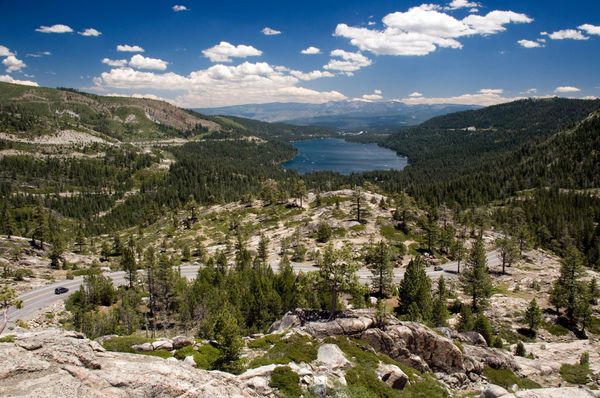
Near mile 50 we crested the ridge, San Jose spread out below us in the heat. I could feel what fifty miles of hills had taken out of him. That distance changes a person. It strips off everything on the surface and leaves whatever is underneath.
Then the trail gave us five miles of downhill. Around mile 55 I pulled out my phone to shoot a quick video, and watching him through the screen, the truth was plain: he had this.
That doesn't mean the end was easy. The last ten miles of a 100K are where good days turn into a crawl. Everything hurts, even going downhill. Trashed quads. A stomach questioning every decision you've made. Every footstep a small calculation to keep from planting your face in the dirt. What changes, if you ran the first fifty well, is what rides along with the pain: a kind of disbelief that your body has carried you this far.
"Enjoy the last 5K"
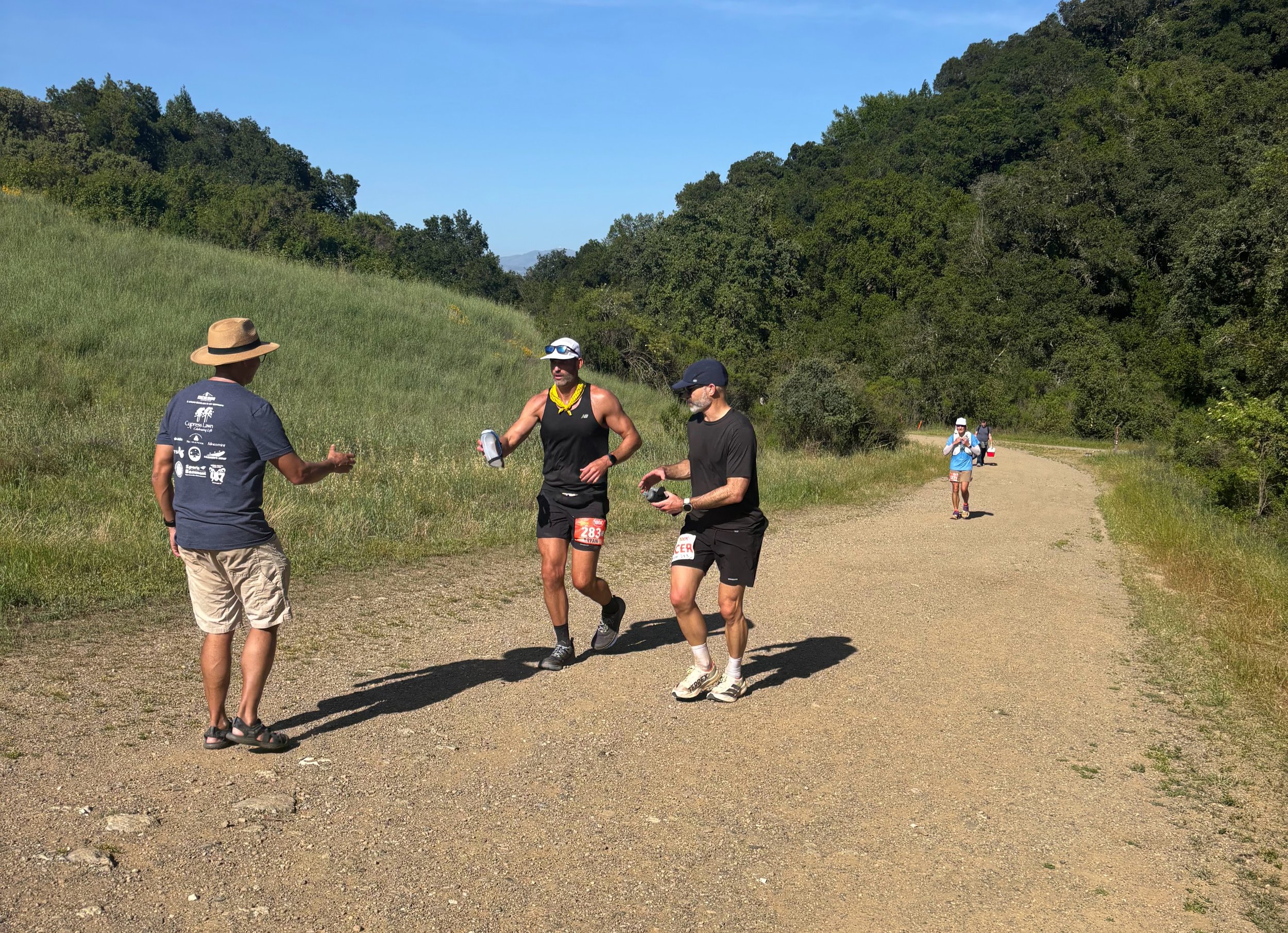
At the final aid station we'd both made our peace with two downhill miles. As we checked in, a volunteer smiled and said, "Enjoy the last 5K."
Bryan grumbled. Anyone who has spent an hour bargaining with their brain over two miles knows that grumble.
The extra mile turned out to be a screaming 5K descent on a wide fire road, and we didn't brake. We dropped into the eight-minute-mile range and gave his quads one last thrashing all the way down. For me, it was a thrill. For Bryan, with fifty-eight miles behind him, it was the gutsiest thing I saw all day.
Five hundred meters
A pacer isn't a pace group in a road marathon. You don't cross the line together. The finish belongs to the runner who carried the whole distance.
It had been a good day in the forest: a well-run race from start to finish, aid stations full of ice, a trail community that shows up for each other, and a plan Bryan executed to the mile. I'd have signed up to pace again before we reached the bottom.
So five hundred meters out, I stepped into the shade and watched from the edge of the trail. Bryan ran the last stretch alone. Lauren stepped forward and held him, and he let go of everything a day like that leaves in you.
For twenty-one miles my job had been to watch every step he took. The last part of the job was to watch from the shade.